#42. “Don’t worry. If AI steals my job, I’ll become a cook!”
I wrote these very words to my friend (and one of my favourite clients), Kristina Podnar, in a recent email. It was a fun and light-hearted comment, but as I re-read it I thought: “Wait a second, why a cook?"
There is a word in Italian – cotto – which means both "cooked" and, colloquially, "done for." Finished. Spent.
I think a lot of designers feel cotti right now, due to AI.
Don’t get me wrong. AI isn’t (all) bad. It’s just that the conversation around it is getting louder; so loud that it’s easy to lose sight of the value we humans still have. It’s an important, meaningful value that no bot can erase.
Think like a cook!
When I started thinking like a cook, a few things became clear. They connect directly to the final chapters of Design for a Better World by Don Norman.
There, Norman explains that we should use technology to augment and amplify our human capabilities. You may have seen people talking about this already, as the only way to keep ourselves relevant. However, he also references the ‘three Ds’ of robotics and automation theory: dull, dangerous, and dirty.
These ‘three Ds’ are the tasks machines should ideally take away from us: repetitive (dull), degrading (dirty), and physically harmful work (dangerous). Norman’s point is not that technology is the enemy. Rather, technology should free human energy for the tasks that matter.
Cooks understand this point inherently. A great chef defines their role from the moment they enter the kitchen. Dull, repetitive work – peeling, measuring, prep – goes to their assistants.
The chef's own, precious hands and mind are saved for specialist tasks that cannot be delegated.

The Menu (2022). A sharp, darkly comic satire about culinary obsession and the price of genius. But beneath the drama, it captures something true: the chef is the mind of the kitchen. Visionary, eccentric, utterly irreplaceable, and never, ever doing the washing up.
I find it quite remarkable that cooks are so resilient, in a way most other professions struggle with. You might comment that this is because food is essential for life ("of course, everyone needs to eat!”). True, we can all cook well enough for ourselves at home. Yet when COVID-19 hit the hospitality industry, chefs did not disappear. Instead, they embarked on a revolution, creating popular online cookery shows and ghost kitchens. Some cooked privately for a handful of people in their homes, while others created new formats, expanding their audiences.
When the world re-opened, new restaurants and eating places emerged… more than there had ever been before. They were driven by something no algorithm could predict: the deep, simple, near-universal human desire to come together over a good meal.
Thinking about AI, I don’t want to feel cooked. I want to be the cook. As in: I want to free myself for creative thinking and creative work, while AI takes care of the three Ds in the background.
AI: dull tasks
The Cook: specialist thinking.

Plastico Gallery, Syros. My husband's creative space, where I occasionally trade my design hat for an apron.
My husband has a small kitchen in his gallery. It took time (and a fair few disasters!) to understand how to manage the space, so we could avoid burned skin and cut fingers. Now, the process is smoothly automated, freeing vital brain-space to think creatively about the gallery’s next culinary event.
I have been doing something similar with Claude, an AI assistant created by Anthropic.
Over the past few months, I have been recovering from burnout. I wanted to reduce my cognitive load, so Claude has been helping to manage my business, from tracking projects to keeping me accountable for the book I am (finally!) writing again. I am briefed every morning, and am helpfully reminded to debrief at the end of each day.
(Designer Christine Vallaure has used a similar system to write her new book. Her article offers some good tips to get started.).
Leaving the dull work behind gave me time to think creatively (more on that below), as well as investing my resources into ideas that will grow my freelance career.
AI task automation also frees my evenings from talking about those jobs with my husband, rescuing a personal life that had shrunk as my working life grew.
There is just one caveat. Effective automation requires effective thinking.
Not thinking is expensive. I mean that literally. Expecting AI to take over your workload without thinking it through first means paying twice: once with your attention, once with your wallet.
Good cooks understand that thinking is not optional. It is the premium ingredient that makes everything else cheaper.
AI: Dangerous tasks
The Cook: Creating with hands, heart and mind.
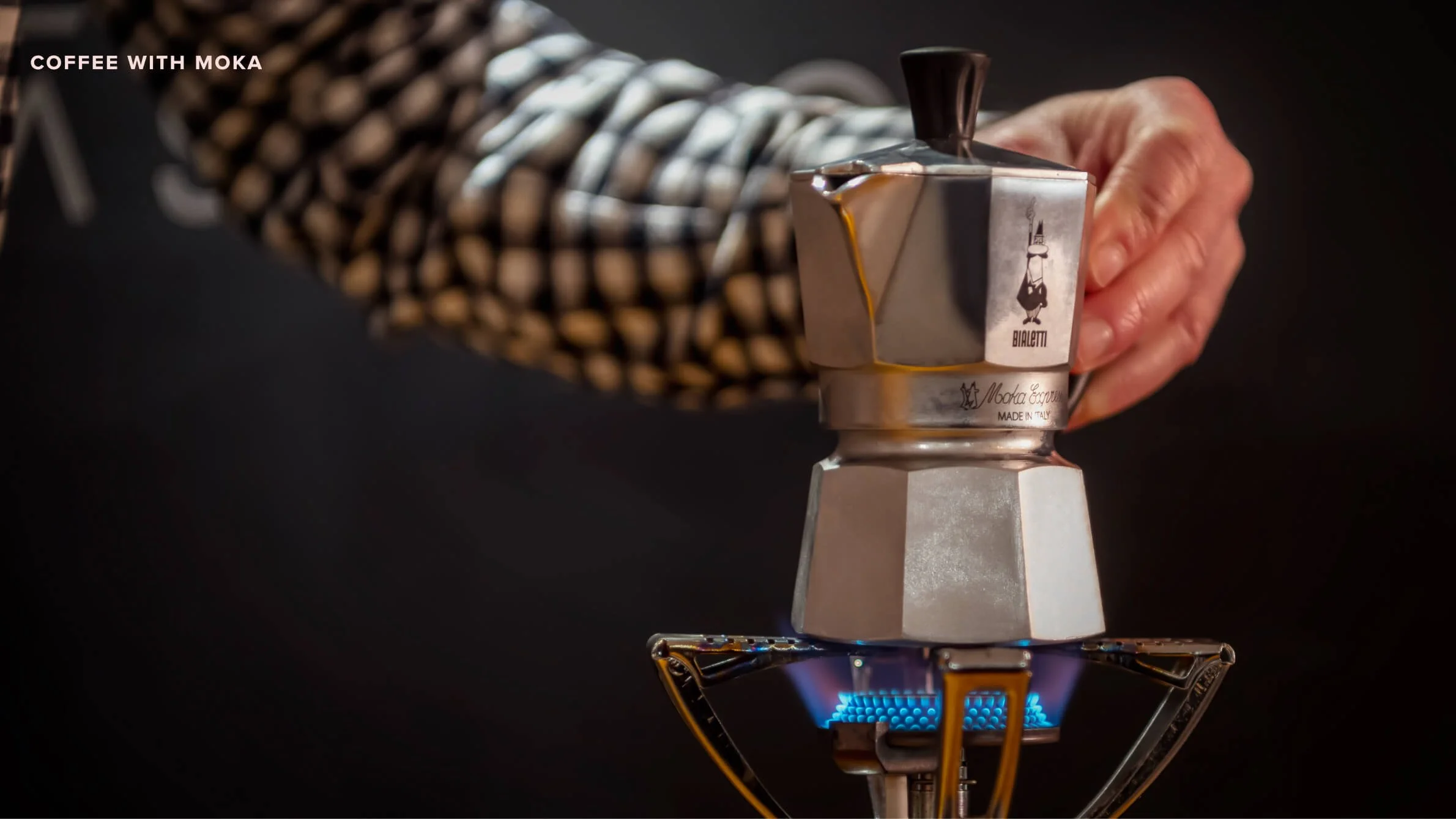
Bialetti Moka. The only ones on Syros. No regrets.
In our gallery kitchen, I prepare my own bases and my own stocks. These are the delicious foundations that make everything taste like I (and only I) cooked it.
Controlling the foundation of a recipe means controlling the result, as well as reducing the risk of failure. This why my husband and I also bake our own cakes, make our own tiramisu, and even churn our own ice cream for affogato.
In the same way, one of the most liberating gifts of AI is the ability it offers me to build things I couldn’t previously justify because of their cost, like tools, prototypes, and learning code. I once handed tasks like these to a developer, crossing my fingers and hoping for the best. Or I would simply abandon them, because the timing and budget weren’t right.
Now, most designers can build from A to Z and have perfect control over the results. For example, I am currently building a ‘Brand Oracle’ to help founders design their companies with confidence and consistency, following the framework outlined in my book.
The result may be a little rough (I may dedicate an issue to it!), but it is mine. It also taught me more about what I really need than any brief I could have written, or any prototype I could have designed in Figma.
Fast prototyping with AI is not about cutting corners. It’s about creating a foundation that will help you test ideas more confidently, without wasting time, money or energy.
AI: Dirty jobs
.
The cook: Surprising connections.

Some of my culinary creations. Always made with a twist because following a recipe exactly has never really been my style.
Our little gallery kitchen is my personal realm, so I use it for decadent culinary experiments!
It’s surprising how often recipe twists bring tantalising results that a recipe book would never teach. Of course, achieving these results takes experience and creativity.
For example, I recently made a beautiful Bellini cake, reminiscent of the Bellini aperitivo (a delightful Venetian peach-and-prosecco cocktail named after a Renaissance painter, Giovanni Bellini).
The cake itself may exist (I didn't change the name), but I made a few essential tweaks. In my Bellini cake, peach is the protagonist while the pan di spagna resembles soft prosecco bubbles, melting irresistibly in the mouth.
I can experiment with recipes like this because I have the experience and ability to combine ingredients, knowing how they will react and fit together. Understandably, this is not a task I would delegate to any assistant or automation process.
In the same way, we humans are good at creating surprising-yet-workable connections (such as the connection you are reading about right now, between AI, the three Ds, and a cook!).
AI cannot sit across from a unique someone like Vitaly Friedman for a total of years, absorb how he thinks, notice what excites him, understand the particular rhythm of his curiosity, and then translate all of that into a visual story that feels uncannily like him.
Vitaly and I have built several landing pages for his courses together. They work because of our accumulated understanding. The illustrations could, perhaps, be generated by AI (but honestly, I love doing it myself so much that… nahh!). Yet the connection between a story and a course subject, the specific metaphors I choose, how I frame an idea based on something I read last Tuesday, or noticed on the ferry to Piraeus (wait for the end of the year to understand why!)… that is all me.
As you may know from reading these newsletters, my creative insights are formed from lived experience, long collaborations, and the kind of lateral thinking that comes from paying close attention to detail over time.
AI can be extraordinary at expanding an idea, once that idea already exists. It can take a direction and run with it, perhaps further and faster than I could alone. But the original, specific connection between two seemingly unrelated things? That begins in a human mind.
(Mine, in this case!),
So, are you thinking of switching your career and becoming a cook?
Probably not.
But thinking like one has its benefits. Thinking like a cook helped me understand what AI is, and what it is not. It is a tool that rewards preparation and penalises laziness. Most importantly, it can’t replace those unique flavours that come from knowing your ingredients well.
The best cooks do not fear new equipment. They simply learn how it behaves, they use it where it helps, and they keep their hands, hearts and minds focused on meaningful work that matters.
That is the only approach that makes sense to me.