
#52. We choose to go to the moon
From the section "The Story That Saved the Day” of The Sunday Tales.
The Story that Saved the Day is a section of The Sunday Tales that will inspire you through recounting fantastic brand stories. What makes them fantastic? Each of the featured brands were "saved" by implementing storytelling elements and methodologies in their business. Taken from a variety of industries and standpoints, these stories will show you how storytelling is a flexible and adaptable tool that, if used correctly, can produce exciting concepts and incredible achievements.
Along with some storytelling methodologies, I will also list some takeaways and lessons we can learn from each brand story. So get ready to take notes!
Yesterday marked the anniversary of a speech that, every year, reminds me why I do the work I do. On 12 September 1962, the young President John F. Kennedy stood at Rice University and announced his intention to put a man on the Moon (and bring him back!) before the end of the decade.
Kennedy did not predict the moon landing. He decided it. Then he set about building the political, technological, and cultural conditions that made it real.
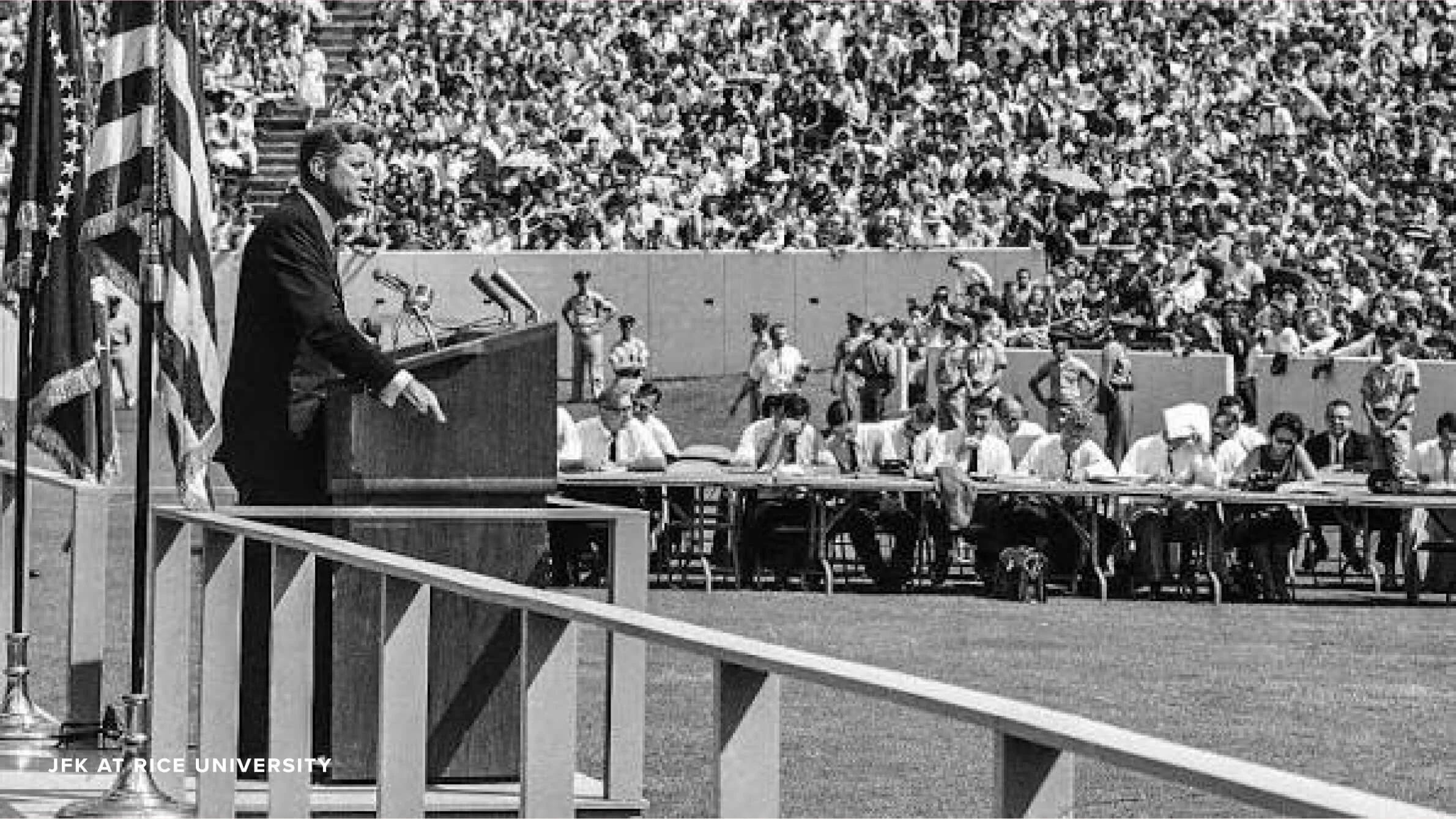
The speech that made the history. JFK speaking at Rice University on September 12th, 1962.
The future is shaped by decisions made in the present
That is the main argument of my book, and what Kennedy proved that September day.
For most of my career as a designer working with startups, the tools I reached for were different ones: trend analysis, scenario planning, weak signal scanning. Each is a method for reading what is coming, treating the future as weather, and the goal as seeing it clearly enough to be well positioned when it arrives.
That way of working never helped me move forward. We designed, hoping conditions would hold, and when they shifted (as conditions always do!), we were back to square one. I have seen companies close down, or change direction so often that designing became like hitting a moving target. Entire teams left the company or were laid off, exhausted and demotivated.
The Three Laws of Futures
Professor Joseph Voros, a futures researcher, sets out three premises he calls half-seriously, The Three “Laws” of Futures.
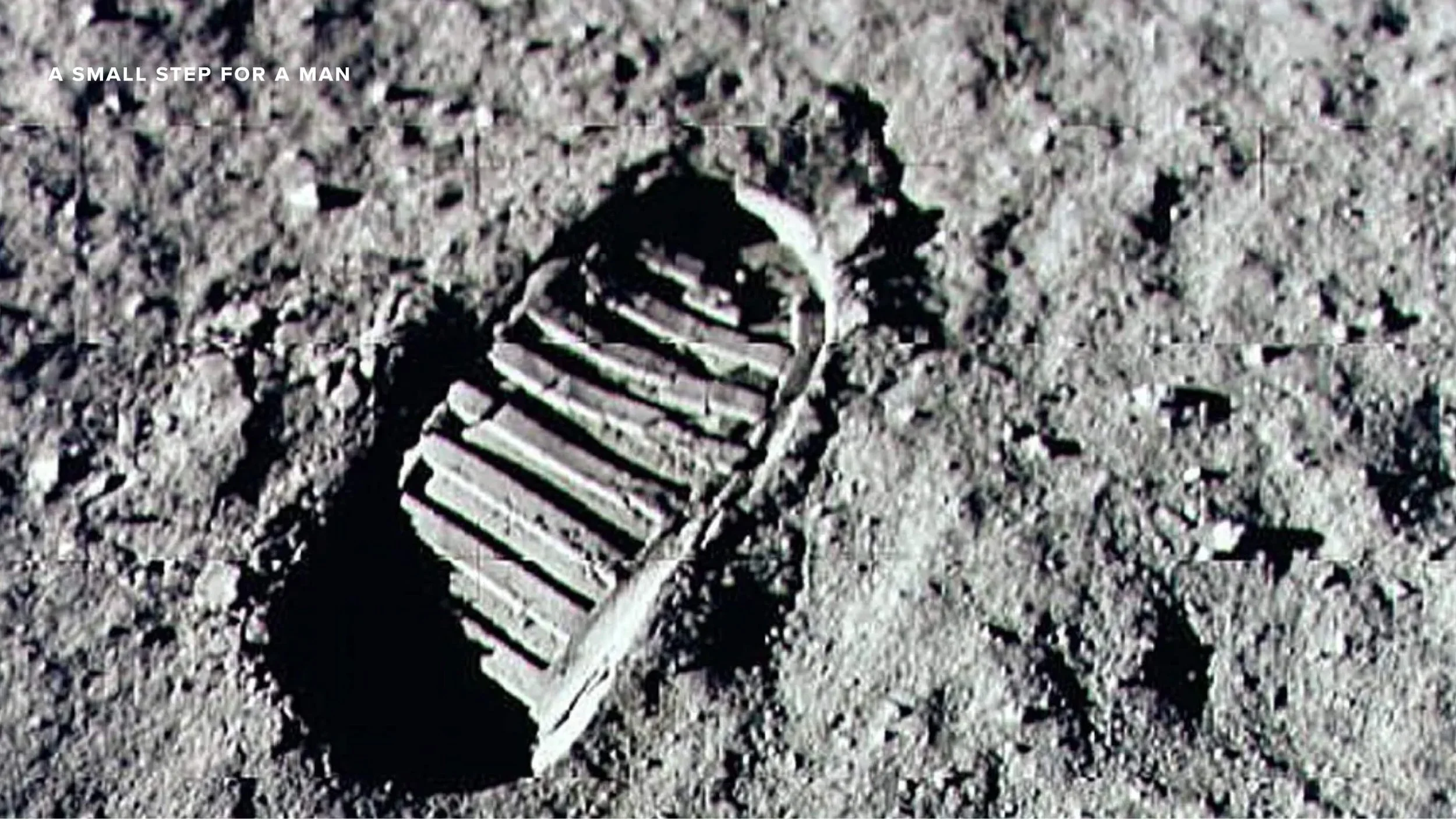
A small step. Neil Armstrong became the first human to walk on the Moon on July 20, 1969.
The first: the future is not predetermined.
There is no single version waiting to be discovered. Many exist, shaped by the possibilities we act on. Kennedy could have chosen any number of goals for his presidency. He chose this one, because in the middle of the Cold War, being the first nation to put a man on the Moon would carry meaning far beyond the landing itself. And he was right.
Designers working with founders can do the same: help shape a specific purpose that defines the kind of future a product sets in motion. This means thinking about all the actors involved — people, technology, and context — as I explored in Issue 43.
The second law: the future is not predictable.
However rigorous our research, we cannot model our way to a reliable forecast. This matters, because it means prediction is not the job. And here the comparison with the present feels urgent.
This week, AI researcher at Anthropic, Jacob Coxon wrote on X: “The people building AI earnestly believe that it could kill us all by the end of the decade. No other human activity poses this level of danger."
If that future can be named and feared, can we also decide, as Kennedy did, to design something different? Can we choose a future we actually want to build, rather than feed the one we are afraid of?
The third law answers these questions: future outcomes can be influenced by our choices in the present.
When we decide things now for a future we want to create, we set conditions that carry forward even when the actors change. Kennedy announced the moon landing in 1962. Apollo 11 did not touch the Moon's surface until 1969. Kennedy was not there to see it. He died six years before Neil Armstrong took that first step. What he had decided in his present was carried forward by other people, by a purpose that had grown larger than any single person.
That is what a desirable future looks like: a purpose that does not depend on one leader, one team, or one set of conditions — but holds, because it was designed to hold.
Final thoughts
As designers working alongside founders, or as founders beginning a new project, two questions are worth placing side by side.
What will happen?
Or: What future do you want to exist, and what will you do, starting now, to design toward it?
The second has no clean answer. There is no trend report that settles it. But it is the only question that puts authorship where it belongs: with you, your company, your product.
Kennedy called it a choice. In my book, I call it a Desirable Future. They are, in the end, the same thing.
If this piece spoke to you, my workshop Design Brands that Last picks up where it leaves off.
It teaches a smart way to work with AI and to build brands that endure, and still feel human and original.
The waitlist for the Autumn cohort is open, and there are only 50 seats. Join today!