
#51. Christopher Nolan’s The Odyssey: 3 epic lessons for the anti-AI era
From the section “Summer Edition” of The Sunday Tales.
The Sunday Tales Summer Edition 2026 will explore topics from my upcoming book. As such, these newsletters will read differently, offering you a sneak peek into my way of working. I hope they will also inspire some healthy discussions!
I went with around 20 friends to see The Odyssey. Our small open-air cinema is lined with garden chairs that, after three hours, become one with your body.
We were an unusual summer mix; an international crowd of island visitors and a bunch of Greek friends, all scattered around the open cinema. (The scattering was a plus, as I could focus on the film rather than, say, turn to a friend and whisper, "oh boy, disgusting!" as Circe turned Odysseus's companions into pigs!).

Syros, 2026. This small open-air cinema is one of the many places I like to go during summer.
The film’s director, Christopher Nolan, specialises in epics (the last film I watched of his was Oppenheimer). I study storytelling for a living, so I especially admire his ability to laser-focus on what truly matters, and how he interprets certain episodes in his own way. The books of The Odyssey are far too dense and numerous to fit into just one film, but Nolan managed to retain their most common and much-loved adventures. This is what makes his film so shareable and accessible.
Despite this, when I finished watching the movie, I reflected less on Nolan’s storytelling skills, and more on how the film was shot: in "the old way". As I sat there in the dark, that choice raised a bigger question:
What does “the old way” mean for brands and creatives, in the era of AI?
Being “anti-AI” shouldn’t be a brand position.
There is a lot of indignation around AI-made creativity, and a lot of anger from creative people who have watched their role shrink down into prompt-writing. Some have been replaced by AI altogether.
A small interruption…

If you are tired of prompting and reprompting AI, I have just launched a brand new workshop on Maven, called “Onboarding AI to your product”, presented with a colleague and design system expert, Eddie Machado.
We start on November 4th. Don’t miss it!
The subscribers to my newsletter receive an exclusive subscriber discount of 10%!
On the other side there is fatigue: not just from those who use AI every day, but also from those who consume its content. AI-generated content is starting to look the same, they complain, and sometimes it is fake.
No wonder that the anti-AI era is becoming a movement, and no wonder many brands are riding that movement, quickly gathering a like-minded crowd of supporters who miss human creativity and all its messy imperfections.
But anti-AI is not a brand position, and it is not something to brag about. Being “anti-AI” cannot be the selling point for your creative work. Rather, it is just another wave; one that must fade eventually, because AI is here to stay.
What anti-AI means is that we have to be intentional. We must decide where AI belongs, and in which places human vision and creativity should stay at the forefront.
Regular readers will note that I have weaved this approach into many of my previous newsletters. But The Odyssey made it clearer than ever; so much so that I sketched these three epic lessons immediately after watching the movie.
Lesson 1: Stay ambitious and give AI intentional space
Christopher Nolan's The Odyssey was shot in IMAX.
Like AI, IMAX was on everyone's lips, though in its beginning very few people actually knew what the term meant. (Sadly, our Greek cinema couldn't project in this format, so we missed much of the hyped resolution).
Even so, the film was an epic its making alone, with hugely expensive stock (IMAX film costs a fortune!), cumbersome cameras (the IMAX camera is heavy and loud), and real constraints (Nolan had to shoot using a mirror system, because actors standing close to the camera couldn't be heard over it, and he refuses to dub).

The Odyssey. The hugely expensive and cumbersome IMAX camera needed a blimp mirror setup.
Nolan is clearly not anti-tech. He loves it, embraces it, and uses it widely. Yet he had the budget for an ambitious project, and chose not to spend it replacing actors or locations. That choice says a lot about how intentional we can be with AI, and how humanity remains essential to how the work gets made.
In business terms, organisations with money to burn still get to decide where it's best spent. Here’s an example.
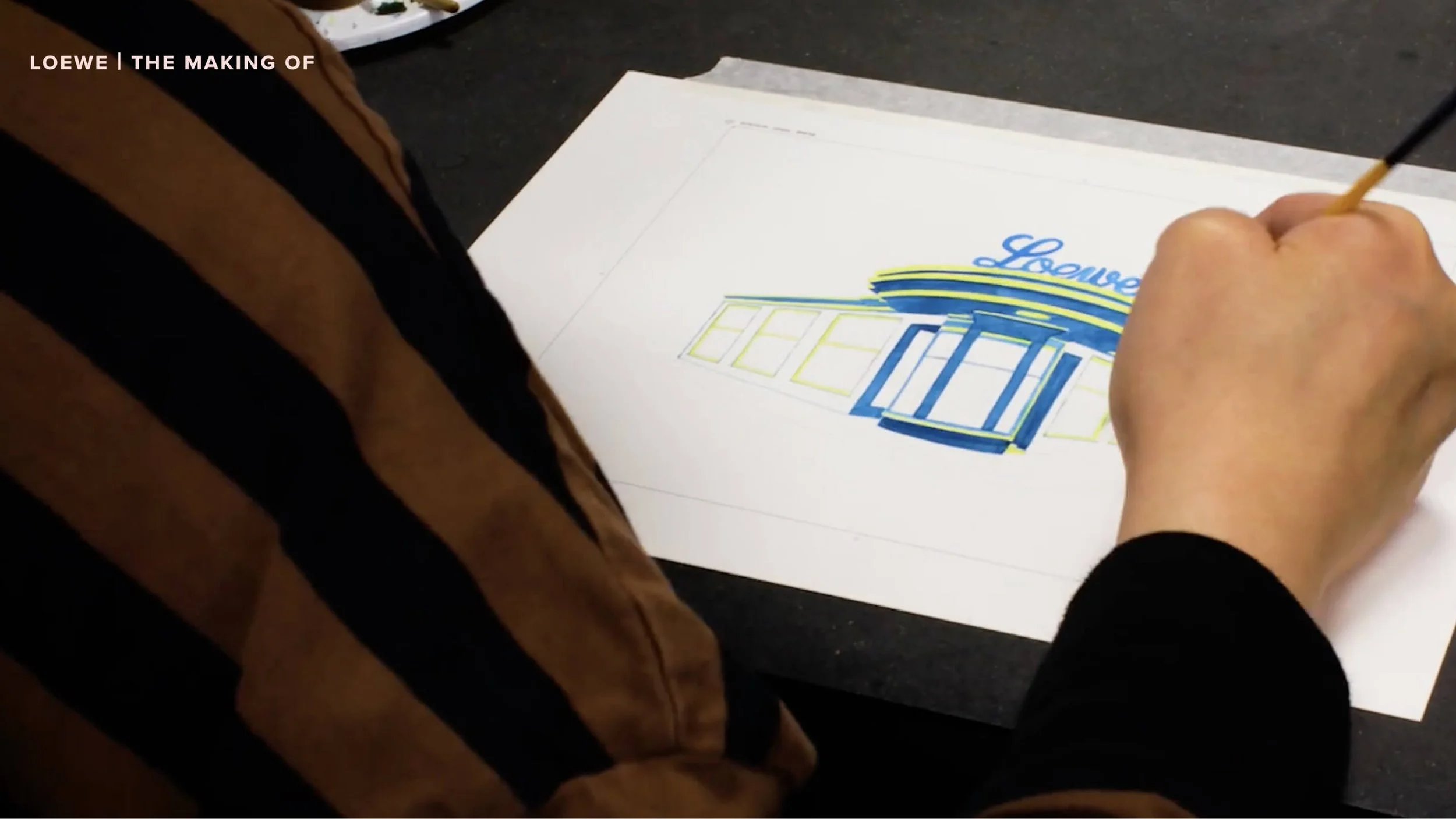
The making of Loewe’s film. Celebrating 180th anniversary of craftmanship. Watch the full video.
When Loewe, one of the oldest luxury houses in the world, celebrated their 180th anniversary, they asked the studio Blinkink to create a film. Director Isabel Garrett and a team of ten artists hand-painted 2,000 frames tracing the house's heritage, layer by layer, with as little digital intervention as possible. This was done to honour the brand's values and its commitment to craftsmanship. Of course, the film could have been made with AI, but Loewe decided AI had no place in their message.
Coca-Cola thought differently. In November 2024 it used AI to revamp its famous "Holidays Are Coming" ad from 1995. The result felt fake and strangely hollow; enough to anger creatives and customers alike (I shared this specific fact in newsletter 46).
Key learning
Just because AI exists, doesn't mean it must touch anything and everything. Organisations can still be intentional, deciding not just where technology belongs, but where humanity best matches their values… and their customers' expectations.
Lesson 2: Stay real, and give AI the power of authenticity
This summer I went back to my homeland of Sicily and visited Alicudi, one of the Aeolian islands. The sea there is rough, deep blue, and full of currents.
Months earlier, Nolan had shot several scenes of The Odyssey not far away, on real boats in the open water of the Aeolian Islands (between Lipari, Vulcano, and Stromboli). Actors and crew later talked about the happy accidents this choice brought them, like real dolphins swimming and playing around the boats, making their scenes more alive than anything they could have staged.
The same need for reality was used in other locations. Ithaca's castle was set on Favignana, in the Egadi Islands, and Troy was set in Morocco. Even the iconic scene of the Trojan horse was shot for real, with hordes of men pulling the giant wooden horse up the shore!

The Odyssey. The open sea near by the Aelian island of Lipari and Vulcano. These huge rocks are called Faraglioni.
Wherever he could, Nolan treated reality as a quality worth preserving, which is exactly what makes his film feel so majestic. Much of the behind-the-scenes footage was shared, precisely to show that the reality was in fact real, which built even more anticipation among movie-goers.
AI has no built-in authenticity. Instead, it tends to flatten everything it touches into a kind of sameness.
So, then, to keep things real we need to document their making, the processes in need of polishing, and the parts only people could have made.
The happy accidents and human imperfections aren't things to hide, because now the process is as important as the result: it's proof of how real, and how costly, valuable creative work truly is.
Here’s another example. Apple TV went through a rebrand at the end of 2025.

Apple TV. The rebrand of Apple TV used real glass slabs and coloured lights, captured in-camera, to create the desired effect. Watch the “making of” video.
Like Nolan, Apple has a big budget, but it is also a tech company with free-wheeling access to the latest technologies. Yet the Apple TV logo redesign didn't use CGI or digital effects, but real glass slabs and coloured lights, captured in-camera, to create the desired effect.
The internal creative team followed a traditional creative process to cut a bespoke variation of Apple's SF typeface for the word "tv." They also chose to capture a real 3d glass model, to preserve the quality of a logo actually made of glass (a choice that aligns with Apple's Liquid Glass design language, the new fluid look rolling out across its operating systems), and in doing so, the realness became the value.
The logo’s “making of” was released alongside its reveal in November 2025. Months later, in mid-2026, Apple TV’s rebrand won the Design Grand Prix at Cannes Lions.
Key learning
A big budget shouldn’t automatically be used to replace humans with expensive technology.
Organisations that value the human touch prefer reality, because imperfection and authenticity have a visceral beauty that AI can't still replicate. This gives the resulting work a deeper level of audience connection.
My advice? Don't slap a “human-made" sticker on your work and think this is enough. Instead, show your audience how that work was made, and let others follow.
Lesson 3: Be tech-wise, and use AI to augment the emotional experience
I jumped out of my moulded-to-me cinema chair at the part where Odysseus navigates the open sea, and the monster Scylla appears out of nowhere and violently pulls people out of the boat.
Apparently, for this scene Nolan heavily used CGI effects to cover the real ratchet used to pull stunt performers out of Odyssey boats. The same CGI effects enlarged the small vortex that were originally created with jet skis, which needed to be a huge whirlpool in the movie.
Nolan welcomed effects, but only to serve reality and make his scenes visually stunning, so they deliver just the right amount of tension.
And indeed, the whole open-air scene screamed in fear when Scylla appeared, and they were audibly disgusted when Circe put a spell on Odysseus' companions, transforming them into pigs.
In the same way, we can use AI to enhance what is real about an experience while also creating a resonant emotional connection with the user.

The Odyssey. The whirpool was created using CGI effects. The place is real and near by Capo Peloro (Strait of Messina).
As I write this newsletter, I've listened to three hours of Spotify without skipping a single song. Why? Because the technology behind it has understood my taste, and every Monday it hands me a Discover Weekly that lands closer and closer to my mood, my style, and my ear.
I've thought about leaving Spotify more than once, for more ethical alternatives.
But I keep postponing this decision because the app knows me so well, and music is a real part of my working day. A bad song can hijack a whole morning of work, a trip, or an hour at the beach. I am not exaggerating here!
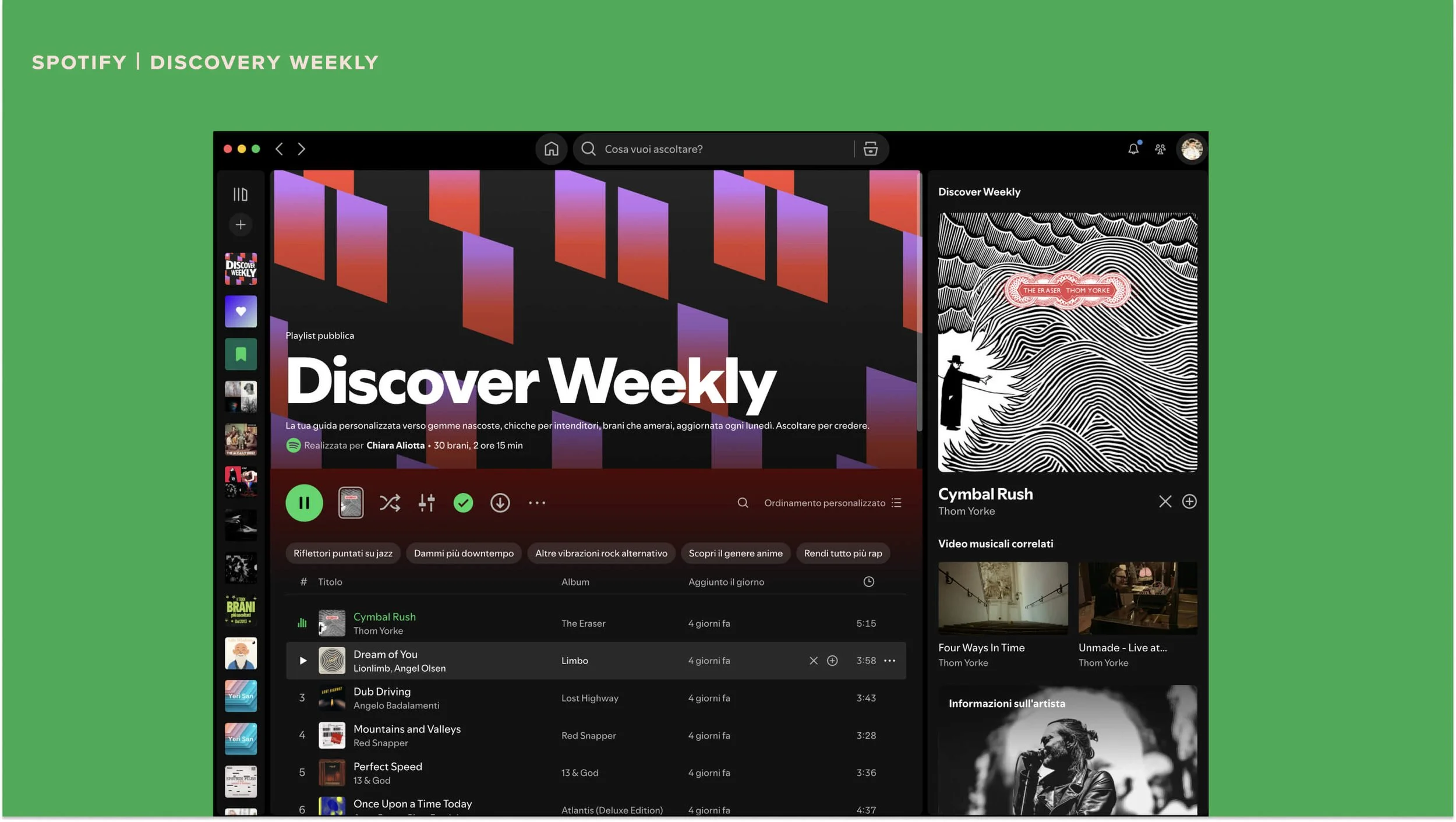
Spotify. My Discovery Weekly playlist of this week. Do you like any of these songs?
And yet nothing on Spotify's surface shows an “AI" icon, or anything that announces you're being read by an algorithm. It merely uses my existing taste to sense what I might love next, and builds on this every time I open the app. This creates a warm feeling of being understood.
Small interruption…
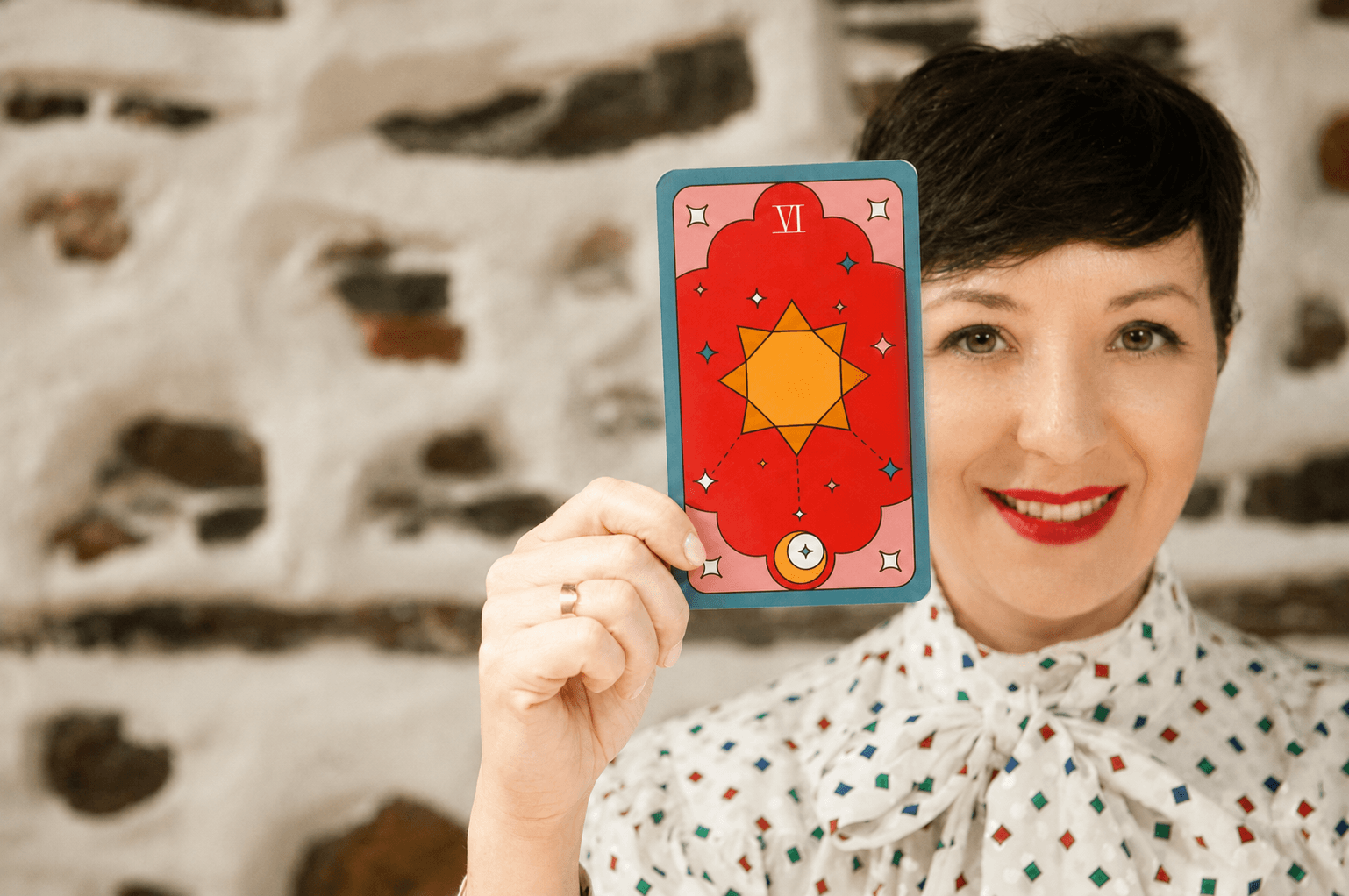
In branding, the feeling of “being understood” has a name: resonance.
It's the highest level a product or a brand can reach, the point where the audience doesn't just use you, they rely on you. But it only holds when it's built on trust.
That's exactly what I’ll help you build in my upcoming workshop, Design Brands that Last. We start on October 5th, and as a Sunday reader, you get 20% off!
Key learning
Just because AI can do something, doesn’t mean we always need to use it. Use AI to quietly enhance an experience and keep everything consumer-facing real. Let AI read hidden patterns that bring you closer to your audience, rather than letting it stand between you and them.
The “anti-AI” of 2026 isn't really anti-AI.
The anti-AI era has become a method of showing indignation to new technology.
Yet this is not the way I would encourage any brand to move towards.
I do appreciate initiatives like the “human-made" mark, which certifies film and work with a real person behind the camera (and in front of it) to promote authenticity. But I still feel that merely labelling work as human won't, on its own, keep creatives in work, or keep creativity itself alive.
As AI evolves, many brands will use it to speed up processes, polish them, and save their budgets. Still, we can educate our clients by helping them spot the places where AI adds value, and where it flattens work and dismisses human originality.
So: if you really must be anti-AI, be the one who can tell the difference.