
#46. Stanislav Petrov and the room for human judegment
From the section "The Story That Saved the Day” of The Sunday Tales.
The Story that Saved the Day is a section of The Sunday Tales that will inspire you through recounting fantastic brand stories. What makes them fantastic? Each of the featured brands were "saved" by implementing storytelling elements and methodologies in their business. Taken from a variety of industries and standpoints, these stories will show you how storytelling is a flexible and adaptable tool that, if used correctly, can produce exciting concepts and incredible achievements.
Along with some storytelling methodologies, I will also list some takeaways and lessons we can learn from each brand story. So get ready to take notes!
I was on a plane back to Greece, returning from a short break in London. I had a podcast in my ears about AI under nuclear pressure, a piece centred on a recent study by Professor Kenneth Payne of the Defence Studies Department at King's College London.
Next to me, my travel companion was reading How We Learn by Stanislas Dehaene, and she interrupted her reading to share some interesting parts of the book with me.
In that exact moment, the story of another Stanislav, Stanislav Petrov, surfaced in my memory. Maybe because of the similar names, maybe because of what the two of them together brought me to reflect on: us designers, and how we now design and build with AI as a given.
The story of Stanislav Petrov, the man who saved the world
It is past midnight on 26 September 1983.
Inside a bunker outside Moscow, a lieutenant colonel of the Soviet Air Defence Forces is watching the screens of the Oko system, the early warning network the Soviet Union has built to detect intercontinental missile launches from the United States.
These are the years of the Cold War, one of the tensest moments after the Second World War. The Soviet leadership is convinced that an American first strike could come at any time.
The screens of the Oko system light up. One missile, the system reports. Then four more. Five intercontinental ballistic missiles, launched from the United States, are heading for Soviet territory.
The procedure is clear: the officer is supposed to confirm the alert and escalate to his superiors, who would then have minutes to decide whether to launch in response.

Stanislav Petrov. The man who saved the world on 26 September 1983.
The officer's name is Stanislav Petrov, and that night he makes a difficult call: not to escalate, but to wait.
His reasoning is simple: if the United States were actually starting a nuclear war, they would not send five missiles. They would send hundreds, and the numbers in front of him do not match the shape of the war he has been trained to expect.
He calls in and reports a system malfunction, and he is right: the cause was later traced to a rare alignment of sunlight on high-altitude clouds bouncing back into Oko's satellite sensors. Soviet engineers fixed the flaw by cross-referencing future alerts with a geostationary satellite.
But that night, the safeguard between the world and a nuclear war was one man's judgement, set against the confidence of a system that was certain it was right.
Petrov's story is forty-three years old, and it has never been more relevant than now, when AI has become so present in everything we do. What follows in this issue are three lessons that night still has to teachus about how to keep our minds intact while we work with machines that seem to know more than we do.
Lesson 1: Do not act under psychological pressure
For years before September 1983, the United States had been running psychological operations to test Soviet radar vulnerability and to demonstrate American nuclear capability.
The pressure on the Soviet command structure was deliberate. The Oko system was being asked to perform under conditions designed to fray it.
In our work today, the pressure is different but no less real. AI is everywhere. The market expects every product to have it. Founders feel they have to stitch AI into whatever they are making just to look current. The result, often, is AI added not because it serves the product but because it has to be there.
I won't forget Coca-Cola's Christmas ad from November 2024. And if you have, let me refresh your memory.

Coca-Cola AI Christmas ad, 2024. The most uncanny part of the ads was the people. AI just cannot capture the complexity of human expressions.
The brand released an AI-generated remake of its 1995 “Holidays Are Coming" spot. The bears looked uncanny. The trucks did not sit right in the snow. The audience felt something was very off. Coca-Cola did not need AI to retell a story that was already working. They reached for it anyway, because the moment seemed to demand it.
They did better with the 2025 Christmas ad, but the spot still did not feel as magical as the original.
While AI can save a lot of money, what builds emotion is not the press of a button.
Good storytellers are in high demand because in this rush to build fast, brands still need a human hand to make the right stitch.
Petrov resisted the pressure to act. The pull to do the thing the situation appears to require, instead of the thing your judgement tells you is right.
Lesson 2: Trust your experience and your instinct
Petrov's experience was what saved the world. He knew the shape of a real American attack. He knew that five missiles would not be how it started. The screens were confident. The procedure was clear. His instinct, shaped by years of training, said something else, and he (luckily for us) listened to it.
In the moment, it was Petrov alone (the cross-reference came later, after this incident), choosing to base his judgement on the work he had already done and not on the answer the machine had given him in isolation.
We are now living through a wave of tools that promise to do brand work the way Oko system promised to read the sky.
AI products like Holo and Vibiz scan your URL and hand back what looks like a finished brand.
I tested a few during my workshop Design Brands that Last because I wanted to see how they perform.
Holo describes itself as a tool that learns your “Brand DNA" and generates ads, emails and social posts. Its own marketing says the “AI is trained on millions of marketing assets from top ecommerce brands”. The page lists Apple, Amazon and Nike.

Vibiz. It created my brand DNA from my site, so it does DNA for any site you input… is anyone in danger? I don't think so. Clients still pay for originality.
If the system is trained on those brands, your output won't be original, just generative: a good copy of those brands. Whatever you put in comes back smoothed against an average.
I checked Vibiz and it goes further. It promises to take a URL or an idea and produce the whole stack: creatives, UGC videos, social posts, landing pages, an MVP site, a Stripe checkout, and the ads to run across Meta, TikTok, LinkedIn, X and Google.
Its tagline is “Run your business with AI". Its three-step pitch is: drop a URL, we build the rest, you get paid.
The problem is not the tool. The problem is what happens when the tool is used without human judgement, and the output risks looking like every other brand built that way.
But it does not have to go that way.
In April 2026, the design agency Porto Rocha, which has done identity work for Nike, Gemini and Robinhood, published a collaboration with Google DeepMind called YOYOYO.
The challenge was to use Nano Banana Pro, Google's image-generation model, to build a new brand and a 3D product from scratch. The product itself was a yo-yo.

YOYOYO. A still from the YOYOYO project, a collaboration with Porto Rocha and Nano Banana.
What makes YOYOYO worth looking at is not the technology. It is the process. It is clear that Porto Rocha did not hand the brand over to the model, but they did what they know best: art-directed and challenged it.
They applied their own branding methodology to direct what the model produced, and refined the outputs until the brand had its own voice rather than the model's. The result has the warmth and craft of a Porto Rocha project, even though the visuals were generated by AI.
Martín Azambuja, associate design director at Porto Rocha, put it cleanly in Transform magazine: “We approach AI with critical optimism, not as a replacement for creativity but an opportunity to expand what's possible. The tools keep changing, but the vision, craft and guidance remain ours."
This is Petrov's lesson rendered in our work.
The tool can be powerful. The judgment still has to be yours.
The next time a system hands you a brand or a UI you did not build, ask whether your own judgement, your own taste, your own sense of what your product actually is, would have produced the same thing. If not, the system is asking you to abdicate, and the work is to push back.
Lesson 3: Understand the limits of technology
Oko system could read the sky but it could not understand the consequence of being wrong. It did not know what the report would set in motion if it were believed.
This is the part of the Petrov story that is most relevant now. Technology can produce an answer, but it cannot judge the human weight of that answer.
In February 2024, the Civil Resolution Tribunal of British Columbia ruled against Air Canada in a case that made the point publicly.
A man whose familiar had just died used the airline's chatbot to ask about bereavement fares. The chatbot promised him he could apply for a refund after travel, but the airline's actual policy did not allow that.
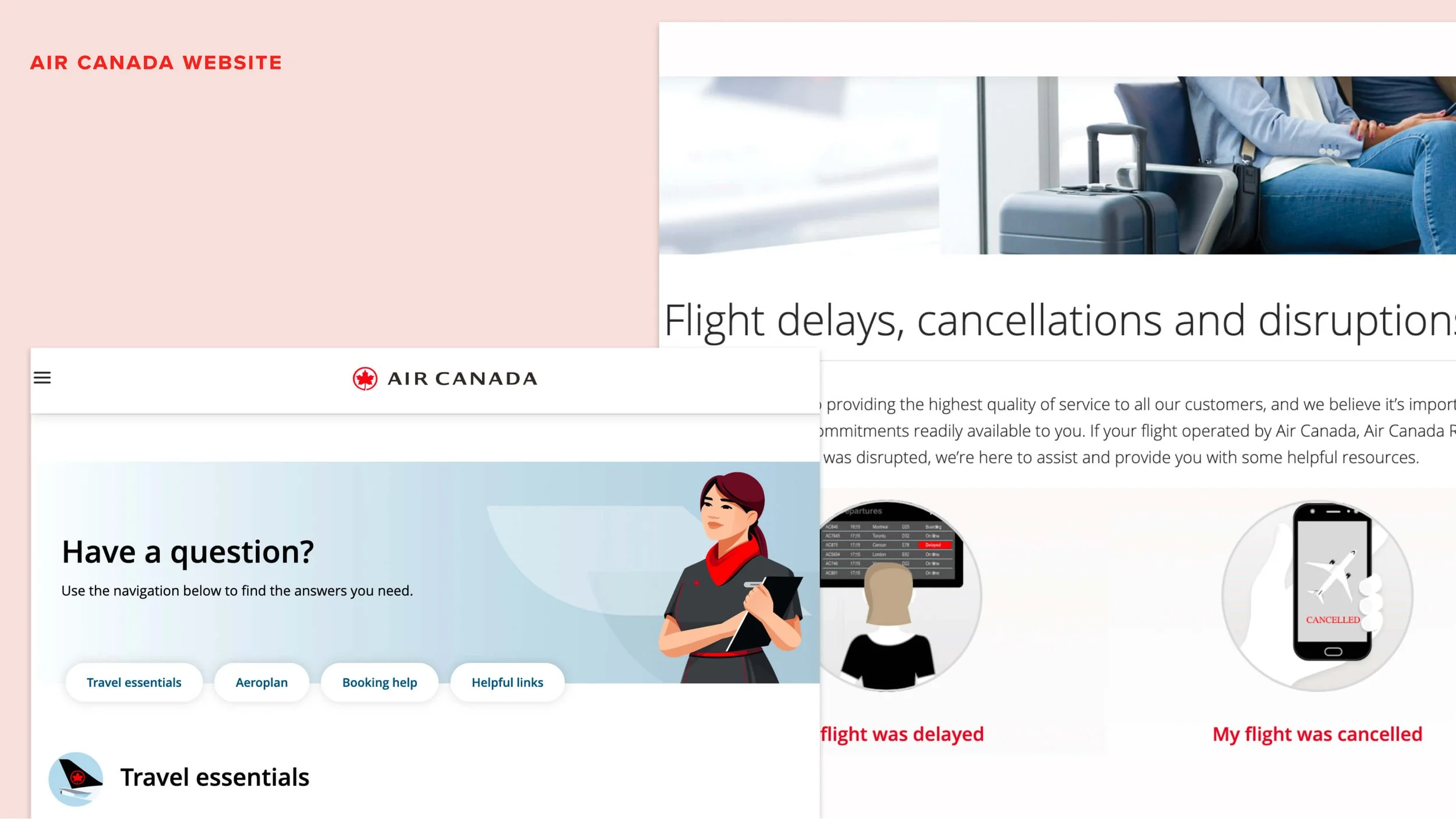
Air Canada website today. No chatbot anywhere, and no easy way to reach the airline either. Just links and forms to fill in. Back to the old days.
When the man tried to claim, Air Canada refused, and then tried to argue in court that the chatbot was a separate legal entity from the airline.
The tribunal disagreed and it held that the chatbot was an agent of the brand and so responsible for what it had said.
The chatbot could not understand grief, and it could not understand what a brand promise means to someone who has just lost a person they loved.
A person sitting in the same role would have heard the silence behind the question because only humans hold that kind of weight. As we hand more decisions to machines, the consequences they cannot see do not disappear. They land elsewhere, on the people the brand was built to serve.
Final thoughts
The Petrov story came back to mind while reading the latest studies published on the first large-scale work on how AI models reason and escalate under crisis pressure. The findings are not reassuring because the models escalate, and their answers point toward inevitable war.
Large language models cannot understand the consequences of their actions because they have never lived with the consequences of anything.
If we want to work alongside them without losing what makes our work worth doing, the three lessons Petrov taught us that night are the ones we have to keep:
Do not collapse under the pressure to add AI in your process or product for its own sake.
Trust the experience you have built and let your judgment decide whether the machine's confident answer is the right one.
Hold on to the human ability to weigh consequences that the system cannot see.
The point is not to outsmart the machine. The point is to stay sharper than the answers the system can give us.
If this piece spoke to you, my workshop Design Brands that Last picks up where it leaves off.
It teaches a smart way to work with AI and to build brands that endure, and still feel human and original.
The waitlist for the Autumn cohort is open, and there are only 50 seats. Join today!