

#53. EverydAI: the first event in Syros about AI and its impact on our daily lives
Autumn has definitely made its entrance. And the way this season slips in, slowly changing our habits, is a good metaphor for how AI has entered our lives.
That thought was the starting point for the first panel I organised here in Syros, called EverydAI. It was held at the amphitheatre of the University of the Aegean.
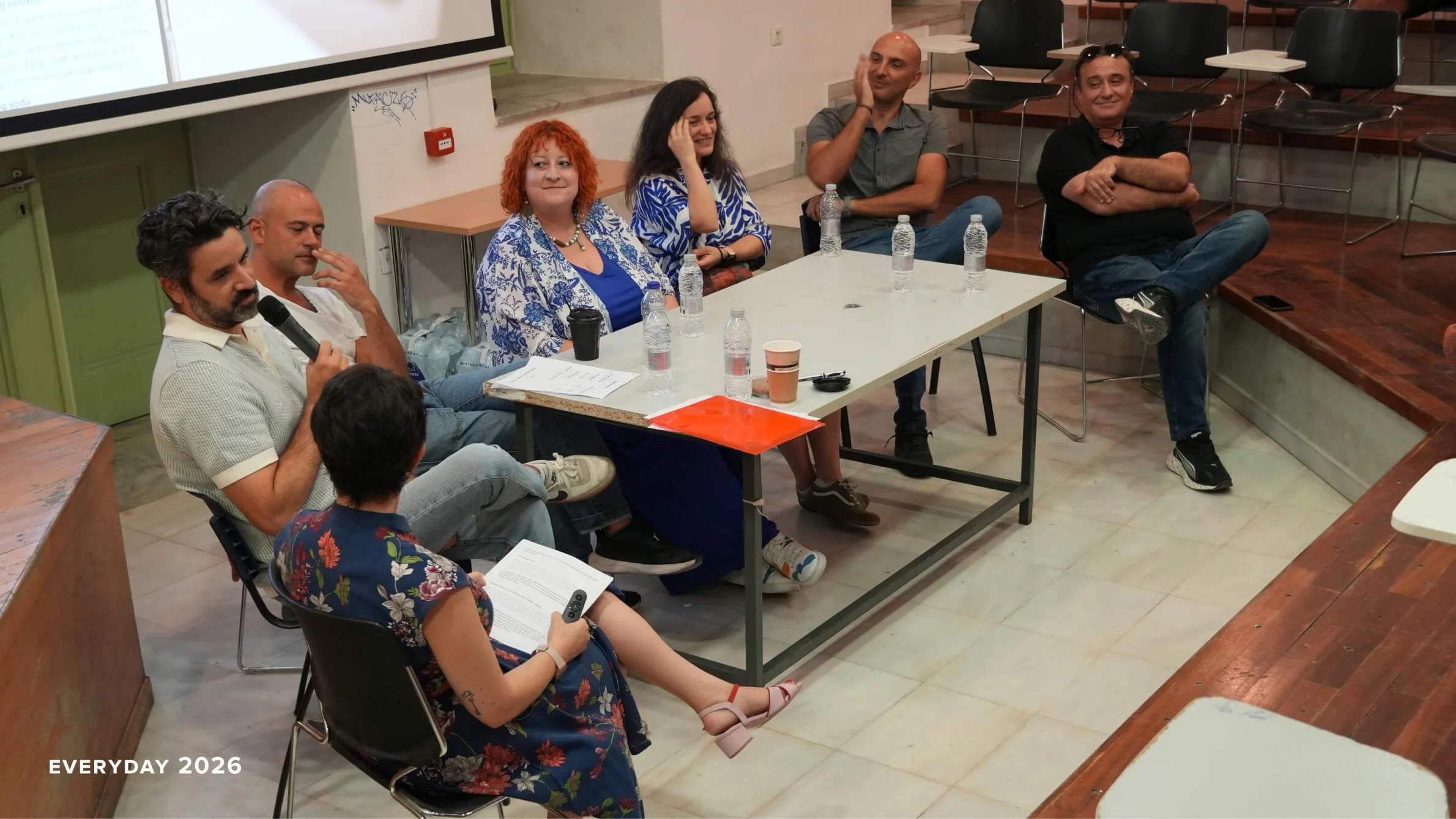
EverydAI. The first AI panel on the island of Syros.
The Panel
I chose the people who joined the conversation with care: some I already knew, and I wanted variety in the room. Three educators and three professional designers.
Educators:
Panayiotis Koutsabasis, Professor of Human-Computer Interaction, University of the Aegean
Modestos Stavrakis, Assistant Professor in Interaction Design, University of the Aegean
Lena Lekkou, Head of Design Department, SAE Athens
Designers:
Eddie Machado, Design Leader
Roberto Rota, Founder of Ate Rote Design Studio and researcher at the University of the Aegean
Raluca Mitarca, Visual Designer and Artist
I moderated the discussion with a set of questions ready by theme. To my surprise, a lot of people came, even though the island had many events on at the same time. The audience was a mix of ages and professions: students from the University of the Aegean, professionals who already use AI in their daily work, and people who were simply curious to hear our take on this new technology.
What was meant to be a one-hour panel turned into an almost three-hour conversation, which I had to bring to a close only because we could have gone on forever.
The panel covered many themes, but here are the three things I took home that night and want to share with you.
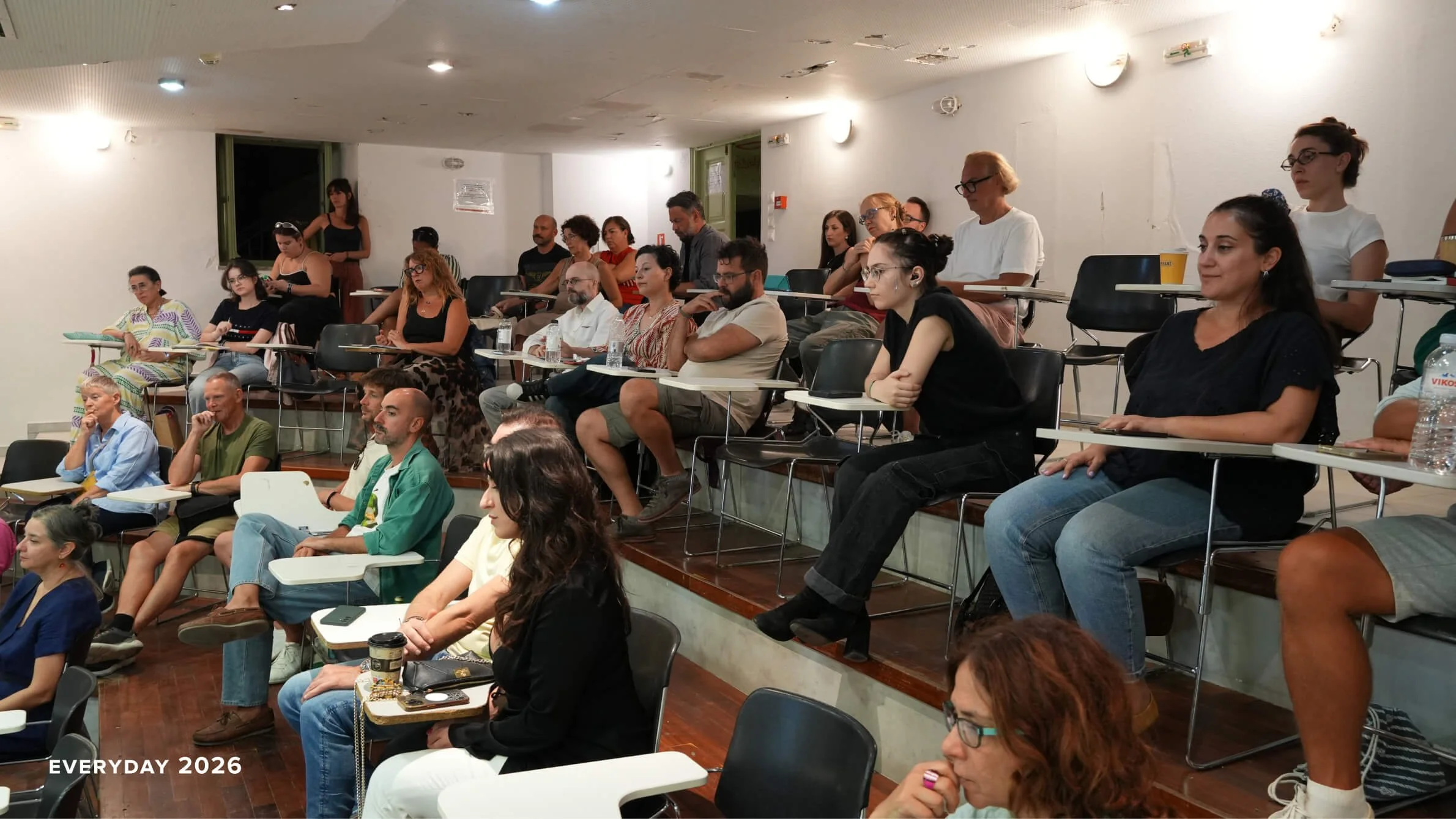
EverydAI. The first AI panel on the island of Syros.
AI is here to stay.
We need to better understand the space it takes in our lives.
I opened with the three Ds of robotics, Dull, Dirty and Dangerous, which I have written about before.
The panellists admitted that AI has taken over some of the repetitive, time-consuming tasks of the day: an agent that checks emails, sets appointments and reminders. Lena confessed it even helps her write that awkward email to a client who is late with a payment.
Design processes have improved too, Roberto said. We can test ideas faster now, saving time and materials, which is a real gain in the way we design. And thanks to algorithms, we can make products that fit users' needs more closely. But holding all that information is not always a good thing, and that led us to the second takeaway.
AI is not bad in itself.
What is frightening is that it is concentrated in the hands of a few.
I read out a few lines from Sam Altman about AI taking our jobs, along with the recent outburst from a young Anthropic researcher, Jacob Coxon, who warned that “AI will kill us all within a decade."
We agreed there is so much good in this world that AI will not kill us. Not literally. Eddie said AI is in its teenage stage: it doesn't behave the way we expect, and it disobeys us. The educators, Panayiotis and Modestos, insisted that this is exactly why AI needs to be regulated, and soon.
We agreed that the people who own AI may not have humanity's good at heart, but that agreements and regulation at a higher level could stop someone from pushing the wrong button.
The educators and the audience were all positive about New York Mayor Mamdani's ban on chatbots and AI tutors from pre-K through 8th grade:
That brought us to the last takeaway of the night.
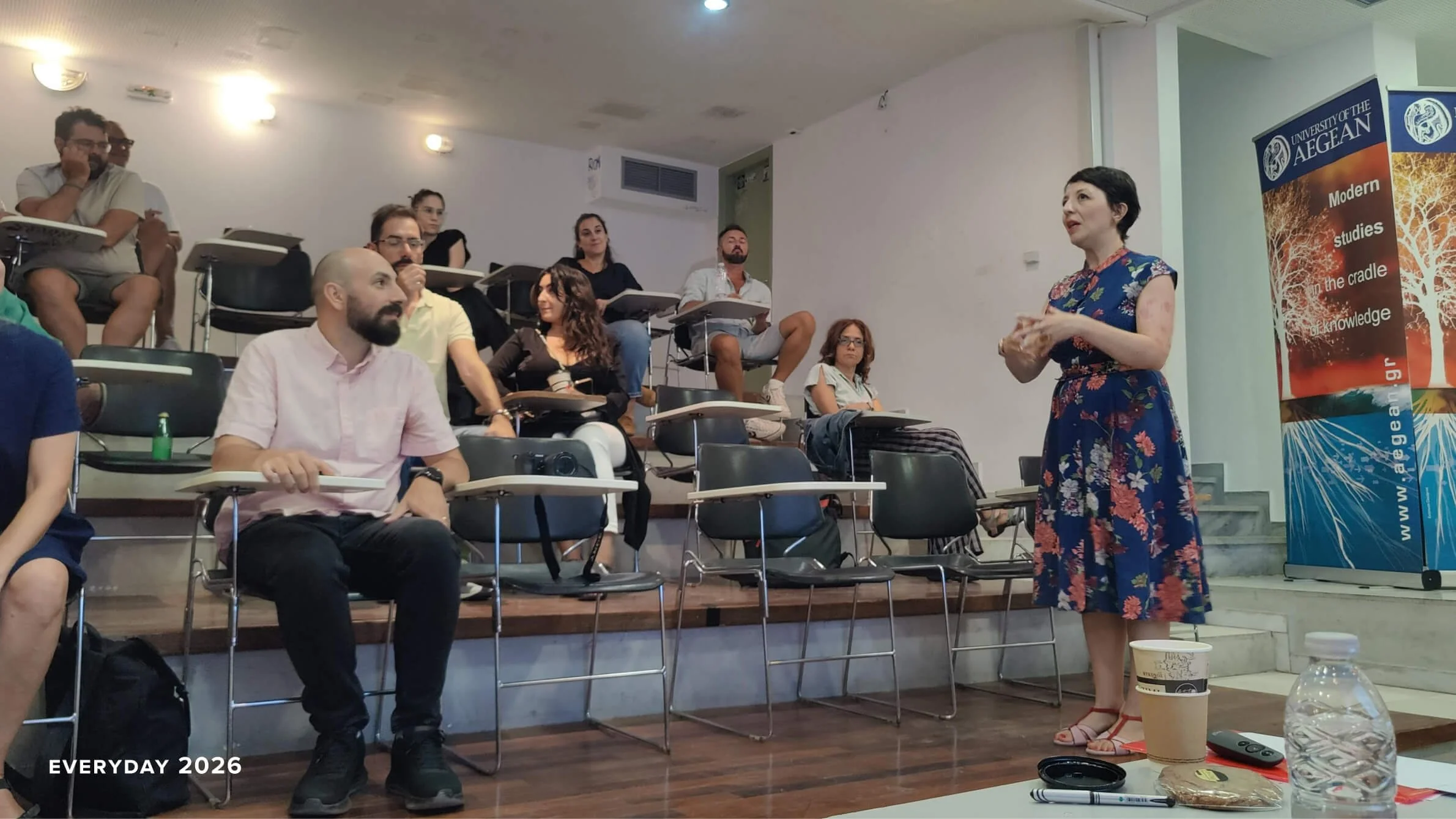
EverydAI. The first AI panel on the island of Syros.
AI changes the way we think and learn.
Our role as designers is to keep it from taking the place of what we enjoy most, and what makes us human.
I confessed to the panel that I had used an AI agent to write one of my replies to their emails. I did it on purpose, as an experiment, so I could understand how much it bothers us to see machines answering for us.
Is it a lack of care? Of attention? Of human touch?
It depends, was the answer. As long as the information is accurate, maybe it is fine. But when AI enters the space of creativity and imagination, Raluca said, that is where we feel we are losing something that is ours. Protecting that is probably where AI starts to find a better place in our lives. A place where it adds to our abilities, rather than reducing us to writing a prompt and watching it run.
Final thoughts
The conversation touched on other beautiful themes too: the responsibility designers carry when they put AI into products, and what it means to add AI to public-facing apps that make decisions for a company, or for us. I had many more questions ready, about environmental costs, the ethical and moral side, copyright, and so on.
If anything, I wished for even more time for open discussion, because the audience seemed so keen to join in.
But the good thing is that the conversation carried on after that day. Some people stopped me in the street to thank me. Others told me they wanted more of it.
I was happy because, for the first time, AI made something clear that I have always said about design: that designers play a big role in how we shape other people's lives. AI has only made it more visible, because it is more pervasive.