
#44. A story no one retells is just content
Week 3 of my workshop Design Brands that Last is closing, with one week to go. The final session is about strategies of growth, not from a marketing point of view, but from a brand one.
Two weeks ago, in week 2, we explored brand storytelling and how a story becomes part of the brand, and then part of the audience that adopts it.
I told the students it starts with two strategic elements: Brand Values and Brand Personality. The first comes from the purpose and resolution of the brand. The second is built the same way we build personality in a person, through the traits we want the brand to live by. (In class, we mapped these through the Twelve Brand Archetypes Margaret Mark and Carol S. Pearson based on Carl Jung’s psychology.)
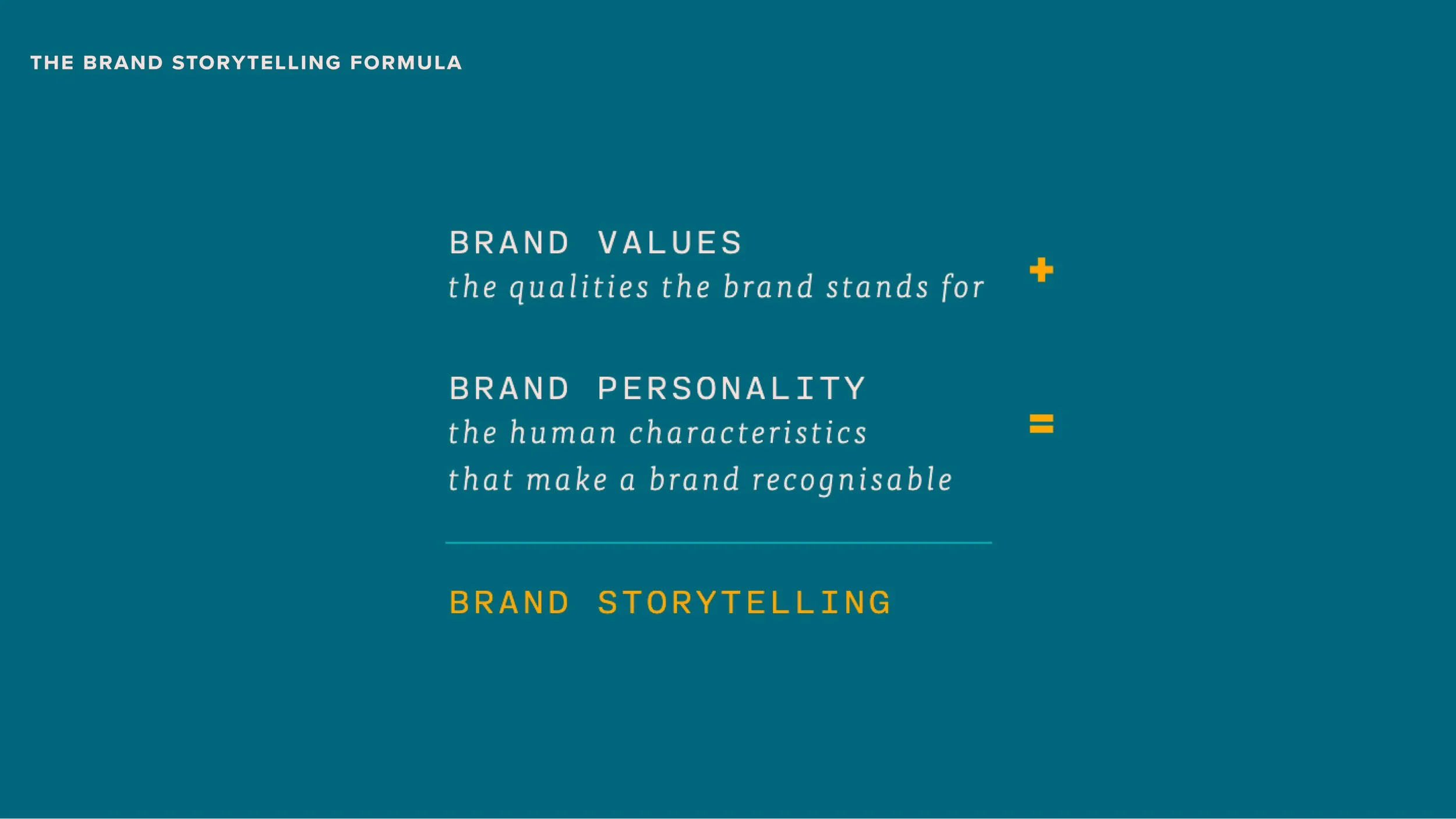
Brand Storytelling. This formula sums up what participants learned in week 2 of my workshop.
One thing I may not have stressed enough is that every story has to let the audience see themselves inside it.
In the workshop, we worked on one method for getting there: forced connection. You link the brand's attributes to something already alive in the audience's life. The connection is constructed, but the truth underneath it is found.

Forced Connection. Link the brand's attributes to something distant from the brand but close to something already alive in the audience's life.
What follows are two examples of brands that did exactly this, where the story carries the brand's values and personality and finds a way to connect with the people it serves.
Bring it Home: Airbnb at Milano Cortina
During week 2, I showed the students the opening of Bring it Home, the short documentary Airbnb released on 23 January 2026 as a campaign for the Milano Cortina Winter Olympics and Paralympics.
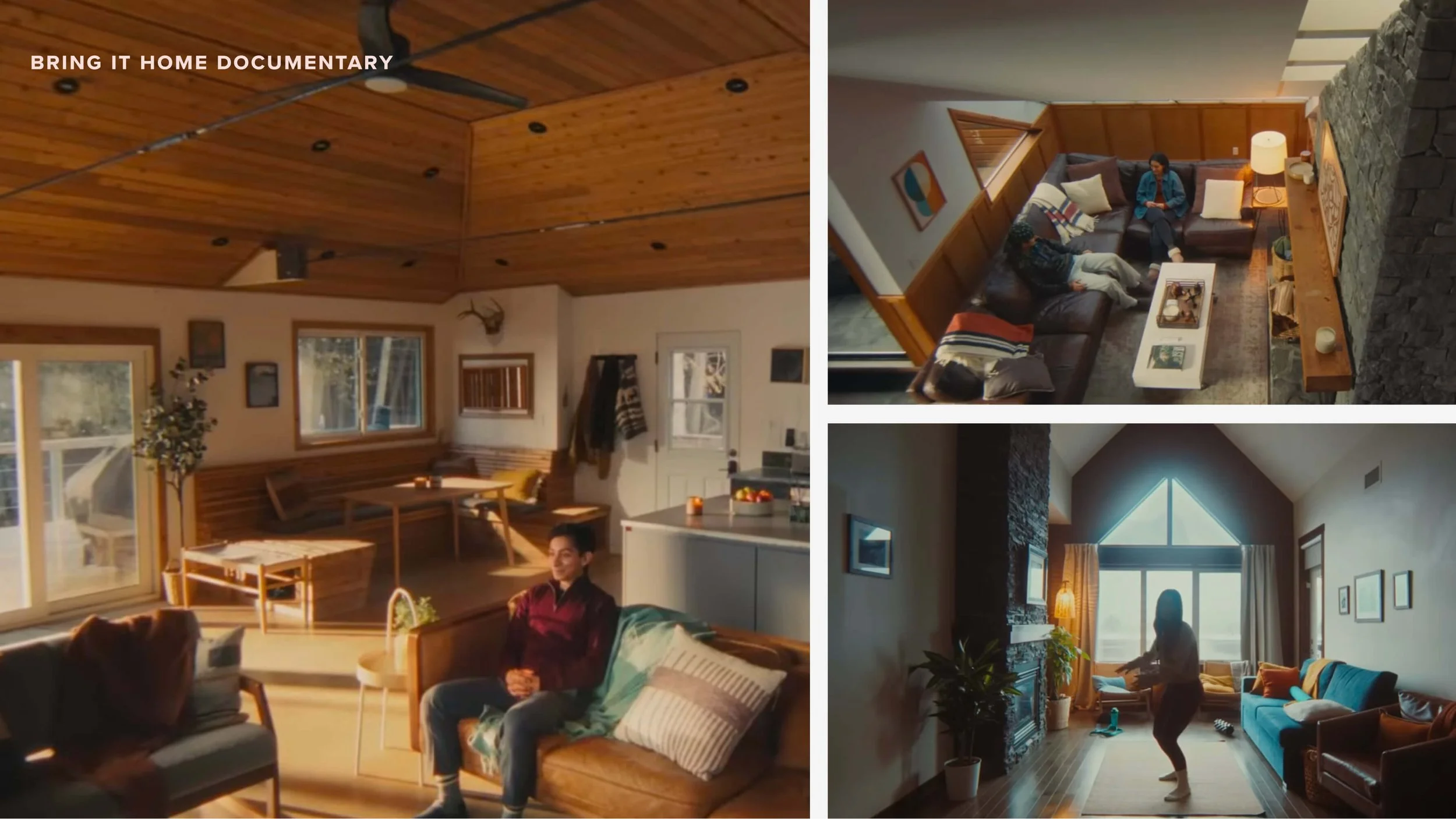
Bring it Home. Some scenes from the documentary.
It follows the difficult and often lonely journey of athletes through training and competition.
The phrase Bring it Home is the obvious sporting one: the medal, the victory. But it is also one of Airbnb's core attributes. Airbnb built itself around the idea of feeling at home anywhere, of living a place like a local.
Over the years the brand expanded from rentals into services and local experiences that make this idea more concrete.

Airbnb Summer 2025 Release. Introducing Airbnb Services, Airbnb Experiences, and an all-new Airbnb app.
This is forced connection. An athlete training for the Olympics has very little in common with someone booking a flat for the weekend. But what they share is the question of where home is when you spend most of your year somewhere else.
Airbnb did not invent that emotional truth. They found it, in the audience that travels for work and misses the people they love, and in the athletes who train far from home for years to bring back a medal.
The documentary is told through the eyes of these athletes, and yet their fears and longings become recognisable beyond sport, beyond nationality. By the end, their story is also the story of anyone who travels, anyone who lives between places. Bring it Home becomes the brand's promise rendered in athletic form.
The connection looks designed because it is. The roots are real because Airbnb found them.
Amazônia: Brand identity with the alphabet of the river
Years ago, when typography was a deep part of my research, I came across an article in National Geographic that argued the entire Latin alphabet can be found on Earth, if you look from a satellite. Rivers bend into Bs. Coastlines fold into Cs. Roads cross into Ts.
I loved the idea immediately and kept it in my mind, waiting for the moment it could be used.
On Earth Day 2025, I came across another platform, Your Name in Landsat, NASA's small site that lets you write anything using satellite imagery from one of the oldest Earth-observation programmes still running.
It made the National Geographic idea touchable. You could type your own name and watch it appear in the rivers and ridges of the Earth.

Your name in Landsat. My name, Chiara, written with satellite images. Try to write yours!
So you can imagine my delight when, not long after, I saw FutureBrand's identity for Amazônia, the regional brand of the Brazilian Amazon. The agency, already known for its Peru identity, had built an alphabet from the actual curves of the Amazon river. Every letter pulled directly from the territory.

The new logo of Amazônia. The Amazon River itself held the key to its identity.
This is forced connection at its most elemental. The brand attribute, the Amazon, was a place. The audience attachment, anyone with a connection to the rainforest in fact or in imagination, was a feeling. FutureBrand connected them through a third element that was already there: the curves of the river, which had been forming letters for millions of years before anyone was around to read them. The connection between alphabet and territory is constructed.

Satellite images of the Amazon River. The curves of the river had been forming letters for millions of years before anyone was around to read them.
The brand system FutureBrand built around this is a living one. It does not stop at the river's shape. It carries what the river means to the people of the region, their way of life and their cultural heritage, their work and the daily experience of being there.
The Amazon river and the brand cannot be separated now. To see one is to see the other.
That is what a story rooted in a place does. The story was there before the campaign. It belonged to the people before the brand recognised it.
Final thought
Storytelling is a way to hold the audience's feelings close to the brand. But we also learned that a story has to combine what the brand stands for (its values and personality) with what already lives in the audience the brand serves.
When you use a tool like forced connection, the bridge between brand attributes and something deliberately distant has to land on something the audience already carries.
It can be a longing for home. It can be a deep connection to a place.
Either way, the story no longer belongs to the brand. It becomes a collective story, told and shared, which is what stories are for.
And one more thought before this letter ends.
A connection like the alphabet of the Amazon, or the longing in Bring it Home, is still something AI cannot make, not with this kind of rooting. AI can help execute and test these ideas. But the moment of recognition that says “the river is the brand”, that is still ours to find.